How to Choose the Best Industrial Solar Panel for Your Business?
Choosing the right industrial solar panel for your business can be challenging. With numerous options available, making an informed decision is crucial. The right panel can lead to significant energy savings and reduced carbon footprints. However, this process is not always straightforward.
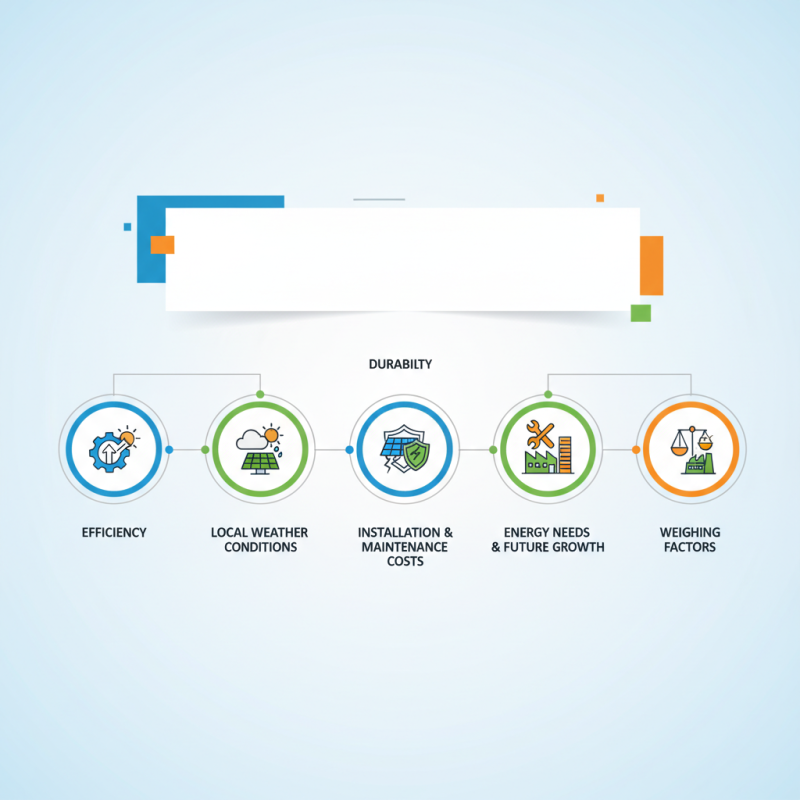
Consider the efficiency of different industrial solar panels. Some might promise high outputs. Yet, they may not perform as expected in real-world conditions. It's important to assess how the panels perform under local weather conditions. Additionally, evaluating the durability of the panels is key. Not all products are built to withstand harsh environments.
Moreover, don't overlook installation and maintenance costs. Sometimes, opting for a cheaper panel can lead to higher long-term expenses. Reflect on your energy needs and future growth plans. This could influence the size and type of panel you should choose. Ultimately, weighing these factors will help you select the best industrial solar panel for your business.
Understanding Your Business Energy Needs
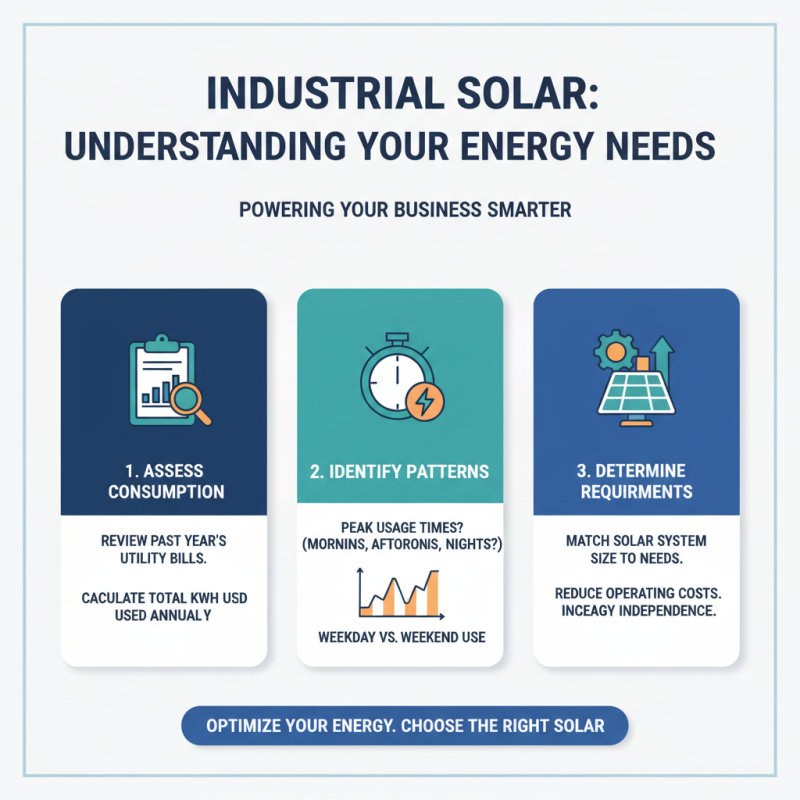
Understanding your business energy needs is crucial for selecting the right industrial solar panel. Start by assessing your current energy consumption. Look at your utility bills from the past year. Do you have peak usage times? Identifying patterns will help you understand your requirements better.
Consider future growth as well. Will your energy needs increase? If so, how much? It’s essential to factor in any expansions in your operations. Remember that underestimating can lead to insufficient energy supply later. Engaging with your team can provide valuable insights. Some employees might notice energy usage habits that aren’t apparent from numbers alone.
Evaluate your business environment as well. Are there potential shading issues? Nearby structures or trees might hinder solar panel efficiency. Every detail counts in optimizing your investment. Address these concerns early on. This reflection can lead you to a more effective solar solution. Look beyond the immediate needs; your energy strategy should align with your long-term goals.
Evaluating Different Types of Industrial Solar Panels
When it comes to industrial solar panels, evaluating different types is crucial for your business. There are several options available, each with unique benefits. Monocrystalline panels are known for their high efficiency and long lifespan. They work well in limited spaces due to their high power output. However, they can be more expensive than other types.
Polycrystalline panels are a more budget-friendly option. They are less efficient but still provide good performance in sunny areas. These panels are environmentally friendly as they require less energy to produce. Thin-film solar panels are lightweight and flexible. They can be installed in various locations but usually have lower efficiency compared to crystalline panels.
Tips: Consider your location. The amount of sunlight your area receives can impact your choice. Think about your energy needs. A larger business might require more power and thus more efficient panels. Don't forget to factor in installation costs. Sometimes cheaper panels lead to higher installation costs.
Be mindful of warranties and certifications. The lifespan of your investment depends on quality. It’s important to reflect on not just immediate costs but long-term savings as well. Each panel type comes with trade-offs. Gather data, consult experts, and take your time. Making a thoughtful decision can have lasting benefits.
How to Choose the Best Industrial Solar Panel for Your Business?
| Type of Solar Panel |
Efficiency (%) |
Lifespan (Years) |
Cost per Watt ($) |
Best Use Case |
| Monocrystalline |
15-22 |
25 |
$0.75-$1.00 |
Commercial buildings with limited space |
| Polycrystalline |
13-16 |
20 |
$0.60-$0.80 |
Large scale installations |
| Bifacial |
15-25 |
30 |
$0.80-$1.20 |
Areas with reflective surfaces |
| Thin-Film |
10-13 |
10-25 |
$0.50-$0.70 |
Flexible applications and low-light conditions |
Assessing Installation Space and Structural Considerations
Assessing installation space is crucial when selecting industrial solar panels. Start by considering the roof or ground area available. Check if the surface can support the panel weight. This is vital for safe and effective installation. If space is limited, you might need to optimize panel positioning.
Tips: Measure the available square footage accurately. Don't forget to consider obstacles like vents and skylights.
Also, think about structural integrity. It’s essential to evaluate your building’s structure before panel installation. A weak structure can lead to issues. Professional assessments are often needed. This could add to your budget but is worth it for safety.
Tips: Consult with a structural engineer if you're unsure. They can provide insights that save you from future problems.
Comparing Costs and Financial Incentives for Solar Adoption
Choosing the right industrial solar panel involves understanding costs and financial incentives. According to a recent report by the Solar Energy Industries Association, the average cost of commercial solar systems has dropped by about 70% in the last decade. This significant reduction makes solar energy more accessible for businesses, but the initial investment can still be daunting.
Businesses can benefit from various incentives. The federal Investment Tax Credit (ITC) offers a 26% tax credit for solar systems installed in 2021 and 2022. Some states also provide additional rebates and performance-based incentives. These financial aids can significantly reduce the overall cost, yet, many businesses overlook them. It’s imperative to research local incentives and calculate potential savings.
Tip: Conduct a financial analysis to understand your break-even point. Often, companies underestimate the savings from reduced energy bills.
Assessing the total cost of ownership is key. Hidden costs can creep in, such as maintenance and insurance. It’s easy to focus only on the installation cost. Reflection on long-term expenses is essential. Evaluate all aspects before making a commitment.
Choosing a Reliable Solar Installation Company
Choosing a reliable solar installation company is crucial for your business. Research indicates that about 30% of solar projects fail due to poor installation. This highlights the need for careful selection. Look for companies with a solid reputation and extensive experience. A good track record can save you future headaches and costs.
Consider the company’s certifications and qualifications. Many reputable installers hold certifications from industry standards. This can be a sign of quality and reliability. However, it’s also important to read reviews and ask for references. Some companies may look great on paper but fall short in practice. Testimonials can provide insight into what to expect.
Transparency in pricing is another key factor. Some companies may hide fees or offer incentives that are too good to be true. A recent survey found that 40% of clients faced unexpected costs after installation. Clear communication about pricing and services is essential. In any case, trust your instincts. If something feels off, it might be worth considering other options.