Tips for Choosing the Right Robot Lithium Battery for Your Needs?
Choosing the right robot lithium battery can be a challenging task. Many factors come into play when making this critical decision. The performance of your robot depends heavily on its battery.
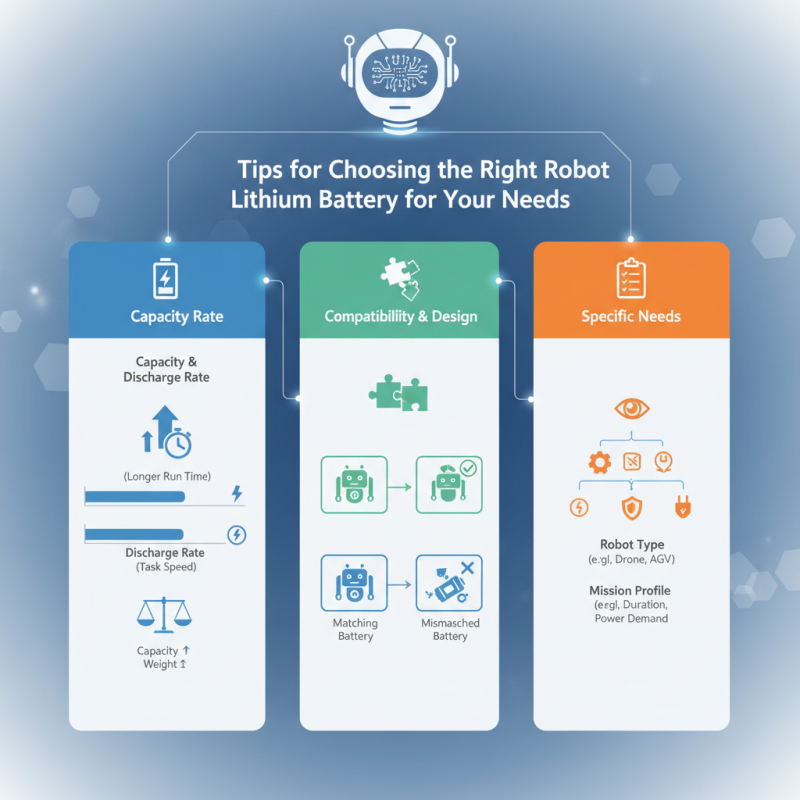
When considering a robot lithium battery, think about the capacity and discharge rate. These specifications determine how long a robot can operate and how quickly it can perform tasks. A larger capacity often means longer run times. However, it can also increase weight.
You might feel overwhelmed by the various options available. Each battery type has its pros and cons. Be mindful of your robot's design and purpose. Choosing a compatible battery is crucial. Batteries that do not match can lead to inefficiencies and potential damage. Always reflect on whether the features meet your specific needs.
Understanding the Different Types of Lithium Batteries for Robots
When selecting a lithium battery for robots, understanding the various types is critical. Lithium-ion (Li-ion) and lithium polymer (LiPo) are the two most popular options. Li-ion batteries are known for their high energy density, often providing 150-200 Wh/kg. They are less prone to swelling and have a longer lifespan, making them suitable for applications where longevity is paramount.
In contrast, LiPo batteries offer higher discharge rates, which is essential for high-performance robots. They can deliver peak currents that exceed 20C, providing quick bursts of energy. However, they are more sensitive to temperature and can swell if not properly managed. This can be a drawback in environments with fluctuating temperatures. As research by the Battery University shows, proper care can significantly extend battery lifespan, yet many users overlook this crucial aspect.
Considering these factors is vital. For instance, the choice depends on whether your robot requires long operational times or quick bursts of speed. The specific requirements will dictate the type of lithium battery you need. While the advantages of each type are clear, the drawbacks also warrant careful consideration to ensure optimal performance.
Evaluating Battery Capacity: How Much Power Do You Really Need?
When choosing a robot lithium battery, understanding battery capacity is crucial. How much power do you really need? An important report by the Battery University suggests that capacity is measured in ampere-hours (Ah). A battery with a higher Ah rating generally lasts longer. However, more capacity can also mean increased weight. For small robots, this is often a trade-off.
Assess your robot's usage patterns. If it only runs for short tasks, a smaller capacity battery might suffice. For long-duration tasks, consider batteries rated at 10Ah or more. Most hobbyist robots function well with a 5Ah battery. But if your robot carries heavy payloads, higher capacity is required. Check your robot’s specifications for detailed power requirements.
Tip: Ensure the battery is compatible with your robot's voltage. Using a mismatched battery can lead to performance issues or even damage. Also, think about the discharge rate. If your robot draws high current, look for a battery designed for it. Some lithium batteries offer discharge rates above 30C, which can significantly impact performance. It's about finding that delicate balance between weight, power, and efficiency.
Evaluating Battery Capacity: How Much Power Do You Really Need?
Assessing Voltage Requirements for Optimal Robot Performance
When selecting a lithium battery for robots, voltage requirements are critical. The voltage directly influences the performance of your robot. It affects speed, torque, and efficiency. An underpowered battery may lead to sluggish movements. On the other hand, too high voltage can damage components. Therefore, finding a balance is essential.
Consider your robot's design and application. Higher voltage may be needed for robots performing heavy tasks. Lightweight robots might function well with lower voltage. Think about the motor specifications too. They dictate the voltage range suitable for optimal operation. Ensure the battery matches these needs.
Testing different voltages can be enlightening. You may start with a recommended range. Then, gradually adjust and observe any changes in performance. This process may reveal that what works theoretically isn’t always practical. Note that performance may fluctuate based on load and environment. Continuous evaluation can lead to better insights and choices.
Considering Weight and Size Constraints for Your Robot Design
When designing a robot, considering weight and size constraints is critical. The choice of lithium battery can significantly affect both. A lighter battery can reduce overall weight, enhancing mobility. In contrast, larger batteries often provide more energy but can compromise design flexibility. As per industry reports, a well-balanced battery can increase robot efficiency by up to 30%.
It's essential to evaluate your robot's specific requirements. For example, applications demanding high energy density may benefit from compact lithium polymer cells. These can fit into tight spaces, but their cost can be higher. Additionally, the performance of different battery types varies under stress. Some may heat up quickly, impacting safety and longevity.
Remember, not all heavy batteries are bad. In some cases, weighing down a robot lowers the center of gravity, improving stability. However, too much weight can hinder movement. A careful analysis of trade-offs will help you make informed decisions. Ask yourself: Does the battery size and weight align with your design goals? Reflecting on these aspects ensures an optimal balance between performance and practicality.
Exploring Safety Features and Lifespan of Lithium Batteries
When selecting a lithium battery for your robot, safety features are crucial. Many batteries have built-in mechanisms to prevent overheating. These features can include thermal fuses or cut-off circuits. Such safety measures help protect both the battery and the robot while in use. However, not all batteries offer the same level of protection. Researching specifications is essential to make an informed choice.
The lifespan of lithium batteries varies widely. Most options provide 300 to 500 charge cycles, but some may fail sooner. Factors like temperature and usage patterns significantly affect longevity. Batteries charged in extreme heat may degrade faster. Also, regularly overcharging can reduce their life. It’s vital to understand these limitations. It’s easy to overlook how your charging habits impact performance.
We can often get lost in technical specs and numbers. Many users might forget about environmental conditions. The battery needs to be compatible with its operating environment. Regular maintenance checks can prevent issues down the line. A well-cared-for battery can last much longer than one that’s neglected. Balancing performance with safety is an ongoing challenge.
Tips for Choosing the Right Robot Lithium Battery for Your Needs
| Battery Type | Voltage (V) | Capacity (mAh) | Lifespan (Cycles) | Max Discharge Rate (C) | Safety Features |
| Lithium Polymer | 3.7 | 4000 | 300 | 20 | Overcharge Protection, Short Circuit Protection |
| Lithium Ion | 3.6 | 5000 | 500 | 15 | Thermal Protection, Overcurrent Protection |
| Lithium Iron Phosphate | 3.2 | 6000 | 2000 | 10 | Overcharge Protection, High-Temperature Resistance |