What Are the Top Energy Solutions Worldwide?
What Are the Top Energy Solutions Worldwide? This question matters in homes, factories, farms, and transport systems. Energy choices shape household bills, industrial output, air quality, and climate resilience. Dr. Fatih Birol, Executive Director of the International Energy Agency, has said, “Energy is the lifeblood of our economies.” His observation remains practical. A hospital needs dependable electricity at midnight. A rural family may need affordable solar lighting after sunset. A steel plant requires stable, high-temperature power every hour.
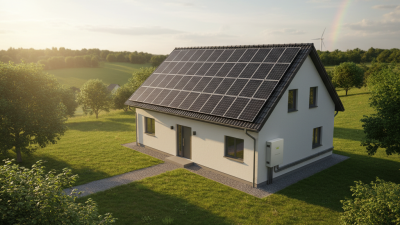
The strongest energy solutions combine renewable generation, efficient equipment, reliable grids, and suitable storage. Solar panels can turn unused rooftops into power stations. Wind farms can produce large volumes of low-carbon electricity. Batteries can balance short-term demand, while pumped-storage hydropower supports longer periods. Heat pumps, efficient buildings, and electric vehicles can reduce wasted energy. In some regions, responsible use of hydrogen, geothermal power, or modern nuclear energy may also contribute. Context matters.
There is no universal winner.
A sunny island may favor solar power and batteries. A cold industrial country may need wind, hydropower, nuclear energy, and seasonal storage. Costs, mineral supply, land use, grid capacity, and local acceptance can change the answer. Even clean technologies have environmental footprints. That uncomfortable detail deserves attention. This discussion will compare leading energy solutions through performance, affordability, reliability, scalability, and real-world experience. It will also examine their limits, because energy decisions improve when optimism meets evidence.
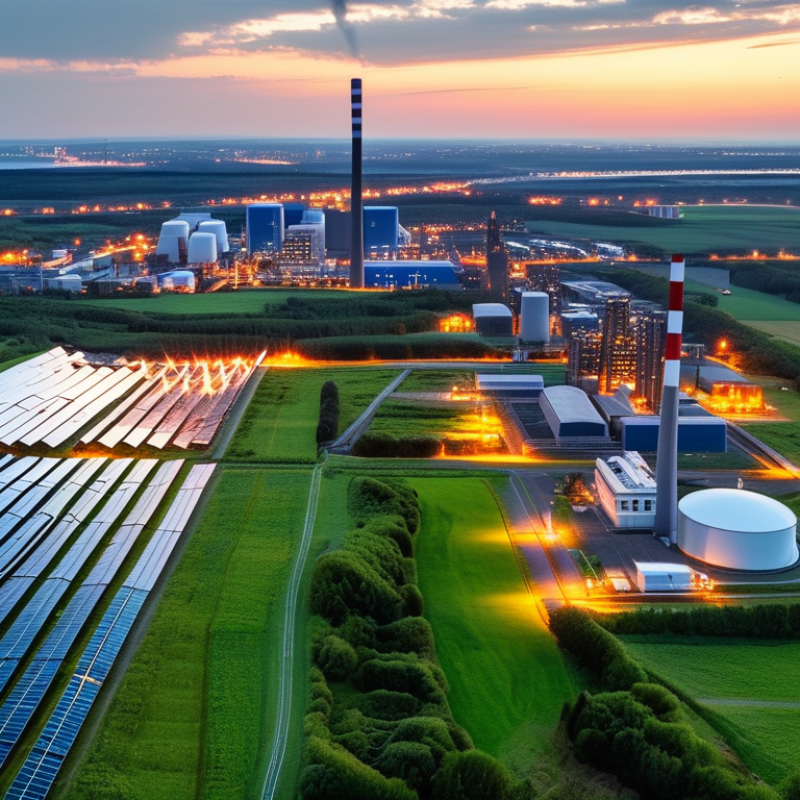
What Are Energy Solutions and Why Do They Matter?
Energy solutions are practical ways to produce, deliver, store, and use energy with less waste and pollution. They include solar and wind power, efficient buildings, electric transport, modern grids, batteries, and cleaner industrial fuels. Their importance becomes clearer beside a real scene: a family cooking beside an open flame, a factory losing heat through an uninsulated roof, or a village facing evening blackouts.
The International Energy Agency reported that global clean-energy investment was expected to exceed 2 trillion dollars in 2024, about twice fossil-fuel investment. The International Renewable Energy Agency recorded 585 gigawatts of renewable capacity added in 2024, representing more than 90% of total new power capacity. Yet progress remains uneven. The 2024 Tracking SDG7 report estimated that 685 million people lacked electricity access in 2022, while around 2.1 billion relied on polluting cooking methods. These figures expose a difficult truth: a solution is not truly successful if it works only for wealthy cities.
Good energy planning combines technologies with local conditions. Batteries can support a clinic overnight, but they need responsible recycling and reliable supply chains. Efficient cooling can reduce electricity demand, although poorly maintained equipment quickly loses its benefit. The data is encouraging, but not perfect. Reports often measure installed capacity better than daily reliability, affordability, or community experience. That gap deserves more attention.
How Renewable Energy Sources Work Around the World
What are the top energy solutions worldwide? Renewable energy works best as a diverse system, not a single technology. IRENA’s Renewable Capacity Statistics 2025 reports 585 gigawatts of renewable capacity added in 2024. Renewables represented 92.5% of all new global power capacity that year. Solar photovoltaic panels convert sunlight directly into electricity, while wind turbines transform moving air into rotating power. Costs are falling, but land, grid access, and local weather still shape each project.
Solar performs strongly in dry, sunny regions, including parts of Africa, the Middle East, and Australia. Wind farms serve coastal areas and open plains, where air movement is more consistent. Hydropower stores energy behind reservoirs and responds quickly to demand, although dams can disrupt river ecosystems. Geothermal plants use underground heat for steady electricity. Bioenergy can use agricultural waste, but poor sourcing may increase air pollution or pressure forests.
Storage makes these systems more flexible. Batteries absorb extra midday solar power and release it after sunset. Pumped hydropower stores electricity by moving water uphill. The IEA’s Renewables 2024 report expects renewable capacity to expand rapidly through 2030, led by solar and wind. Yet forecasts are not guarantees. Transmission delays remain serious. Some projects also overlook community concerns. I still question whether “clean” energy can be judged only by emissions, without examining minerals, recycling, and local water use.
What Are the Top Energy Solutions Worldwide?
Global renewable electricity generation by source in 2023, measured in terawatt-hours (TWh).
Hydropower produced the largest amount of renewable electricity worldwide, while wind and solar power were the fastest-expanding major sources. These technologies work by converting moving water, air currents, and sunlight into electricity.
Source: Energy Institute Statistical Review of World Energy 2024. Values are rounded estimates for 2023.
Which Energy Technologies Support Reliable Power Systems?
What Are the Top Energy Solutions Worldwide?
Reliable power systems need more than abundant generation. They need flexibility, strong networks, and careful planning. Wind and solar now provide affordable electricity in many regions, but their output changes with weather.
Grid-scale batteries can respond within seconds, supporting frequency control during sudden demand changes. Pumped-storage hydropower offers longer coverage, especially where suitable terrain exists.
Hydropower, geothermal plants, and nuclear generation can provide steady output with lower direct emissions.
Flexible gas generation may still support difficult transition periods, although fuel supply and emissions require strict management. Demand-response systems also matter. They can shift water heating, cooling, or industrial activity away from peak hours. During a cold winter evening, this flexibility may prevent a local transformer from overheating.
Strong transmission lines are equally important because surplus electricity must reach distant users.
Microgrids can keep hospitals, shelters, and essential facilities operating when wider networks fail.
Yet no technology works perfectly everywhere. Batteries have limited duration, forecasts can be wrong, and large projects often face delays.
Tips:
Combine several technologies instead of depending on one solution. Measure performance during heatwaves, storms, and equipment failures. Keep emergency reserves available. Review assumptions regularly, because yesterday’s demand pattern may not fit tomorrow’s system. Reliability is built through testing, maintenance, and honest attention to weak points.
How Countries Compare Energy Solutions by Cost and Impact
Comparing energy solutions across countries requires more than a price tag. Solar power can be inexpensive in sunny regions, yet storage raises delivered costs after sunset. Onshore wind often performs well where strong airflows meet available transmission lines. Not everywhere. Financing rates can change costs as much as technology choices. High interest rates punish capital-heavy projects, even when operating costs remain low.
Countries also measure impact differently. A hydroelectric project may provide steady electricity and flood control, but it can alter river habitats and displace communities. Solar farms use little water during operation, but their land footprint can trouble farming regions. Wind projects reduce fuel use, though transmission upgrades and local acceptance may slow construction. Natural gas can balance variable renewables quickly, but its emissions depend on methane control and plant efficiency. Coal may appear familiar and dispatchable. Its health and climate costs are rarely captured in electricity tariffs.
A coastal country may favor offshore wind, while a dry inland country may prioritize solar, storage, and stronger interconnections. Reliable comparisons examine full-system costs, not generation costs alone. They include grid reinforcement, backup capacity, decommissioning, and household affordability. Public data helps, but estimates still contain uncertainty. Weather varies. A seemingly cheap option can become expensive when delays, curtailment, or imported equipment are ignored. That is where comparisons need humility.
What Are the Top Energy Solutions Worldwide? – How Countries Compare Energy Solutions by Cost and Impact
Indicative global comparison of electricity-generation and storage technologies. Costs are shown in 2024 US dollars and should be interpreted as broad global ranges rather than country-specific quotations.
| Energy solution |
Typical application |
Estimated levelized cost
($/MWh) |
Lifecycle emissions
(g CO₂e/kWh) |
Typical capacity factor |
Cost competitiveness |
Climate impact |
Key strengths |
Main limitations |
| Onshore wind |
Utility-scale electricity generation |
$27–$73 |
11 |
30%–50% |
Very high |
Very low |
Low operating emissions; competitive cost; scalable in suitable windy regions |
Variable output; transmission, land-use and permitting requirements |
| Utility-scale solar photovoltaic |
Large solar farms and low-cost daytime generation |
$29–$92 |
41 |
15%–30% |
Very high |
Low |
Rapid deployment; modular design; no fuel cost during operation |
Daylight dependence; storage or flexible generation may be needed |
| Existing hydropower |
Dispatchable or flexible renewable generation |
$30–$90 |
24 |
30%–60% |
Very high |
Low |
Long operating life; grid flexibility; high energy output in suitable locations |
Limited new sites; ecological, social and drought-related risks |
| Geothermal power |
Firm renewable electricity and heat |
$61–$101 |
38 |
70%–90% |
High |
Low |
Reliable 24-hour generation; small land footprint; useful for system stability |
Resource is geographically concentrated; drilling risk and high upfront costs |
| Offshore wind |
Large-scale coastal and marine generation |
$74–$139 |
12 |
40%–60% |
Medium |
Very low |
Strong and relatively consistent wind resources; close to many coastal demand centers |
Higher construction, financing and maintenance costs than onshore wind |
| Nuclear power |
Firm, low-carbon baseload generation |
$142–$222 |
12 |
80%–95% |
Low |
Very low |
High reliability; very low lifecycle carbon emissions; limited direct land use |
High capital cost; long construction periods; radioactive-waste management |
| Biomass power |
Dispatchable generation using sustainable organic feedstocks |
$77–$144 |
230 |
60%–85% |
Medium |
Variable |
Dispatchable output; can use agricultural or forestry residues |
Emissions depend strongly on feedstock and land-use practices; supply constraints |
| Natural-gas combined cycle |
Flexible generation and balancing capacity |
$45–$108 |
490 |
40%–70% |
High |
High |
Flexible operation; relatively fast construction; useful for balancing variable renewables |
Fuel-price volatility; carbon emissions; methane leakage risk |
| Coal power |
Conventional dispatchable generation |
$69–$168 |
820 |
40%–75% |
Low |
Very high |
Established infrastructure and dispatchable output |
Highest lifecycle emissions among major electricity technologies; air pollution and water impacts |
| Grid-scale battery storage |
Short-duration storage and renewable-energy balancing |
$60–$210 per MWh delivered |
Approximately 75–150 |
Not applicable |
Medium |
Moderate |
Fast response; improves solar and wind integration; can reduce peak-generation needs |
Does not generate electricity; duration, degradation, material sourcing and recycling constraints |
How to read the table: Lower levelized cost and lower lifecycle emissions generally indicate stronger economic and climate performance. Actual results vary with financing costs, resource quality, grid connection, construction conditions, fuel prices, local regulation and system integration requirements. Capacity factor refers to the average output compared with maximum possible output.
Indicative ranges synthesized from widely used international energy-cost assessments and lifecycle-emissions studies, including recent renewable-cost statistics, global electricity-cost benchmarks and IPCC lifecycle-emissions literature. Values are rounded for comparability; storage emissions are measured per unit of electricity delivered from the battery.
What Innovations May Shape the Future of Global Energy?
The future of global energy may be shaped by systems that work together, not one perfect invention. Solar panels could become lighter, more efficient, and easier to install on rooftops, walls, and farmland. Perovskite designs show promise, but their long-term durability remains uncertain. Offshore wind can produce power at a large scale, especially near crowded coastal regions. Turbines still face rough weather, complex maintenance, and public resistance.
Energy storage will determine whether clean electricity remains available after sunset or during calm weather. Large batteries can respond within seconds, helping stabilize local grids. New chemistries may reduce dependence on scarce minerals, although safety and recycling require stronger evidence. Green hydrogen could support shipping, steelmaking, and seasonal storage. It is useful, but inefficient for many ordinary household needs. That distinction matters.
Smarter grids may connect rooftop generation, electric vehicles, heat pumps, and flexible factories. Digital controls could shift consumption toward sunny or windy hours. However, software cannot replace transmission lines, trained workers, and careful regulation. Advanced geothermal systems might provide steady power beneath regions without traditional geothermal resources. Early projects must prove they can control drilling risks and manage costs. Some forecasts still look too neat. Real communities may need slower, less glamorous solutions, including insulation, efficient appliances, and modern power lines. Progress will depend on measurable performance, transparent data, and designs that remain dependable during heatwaves, storms, and long winter nights.